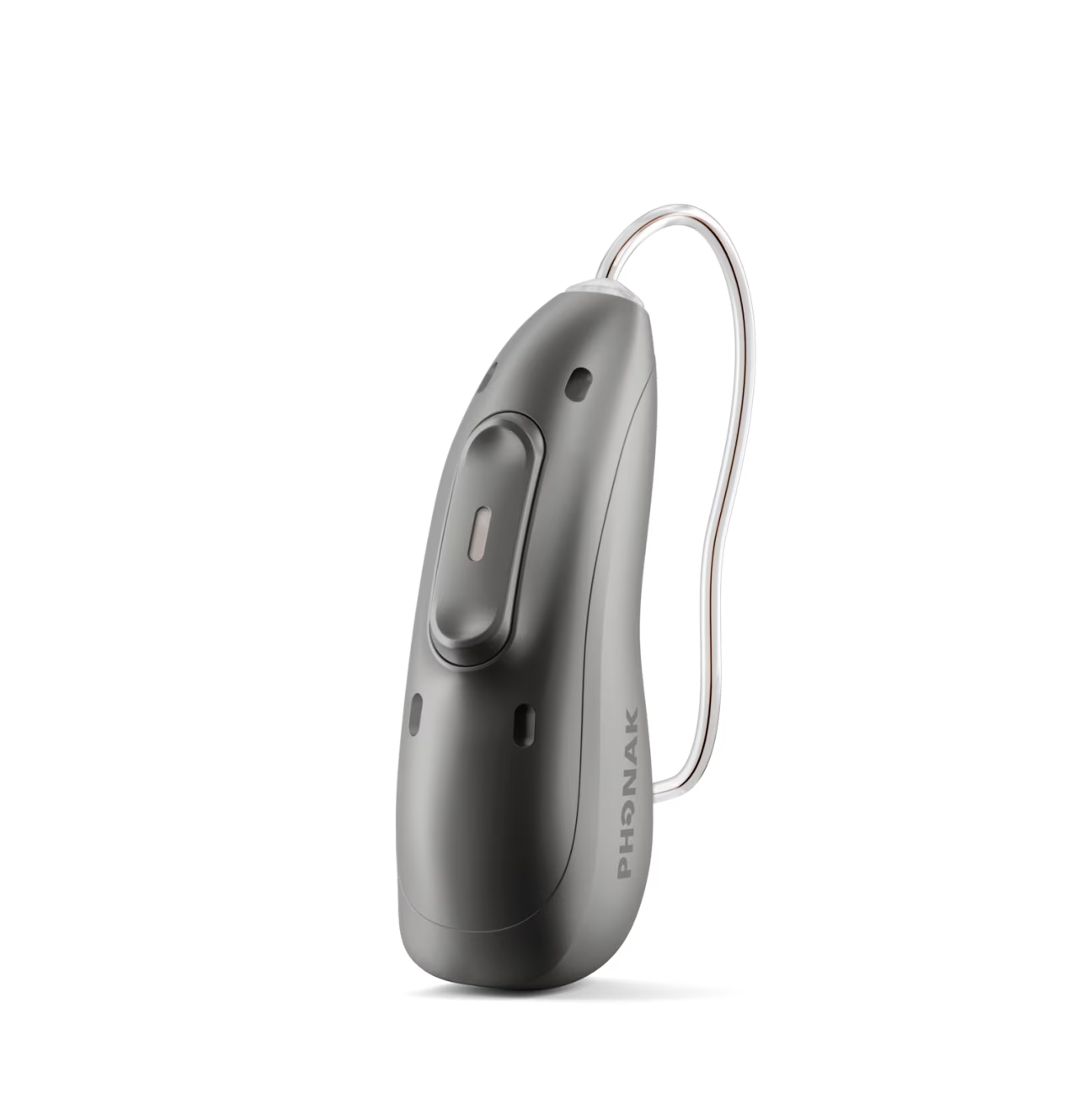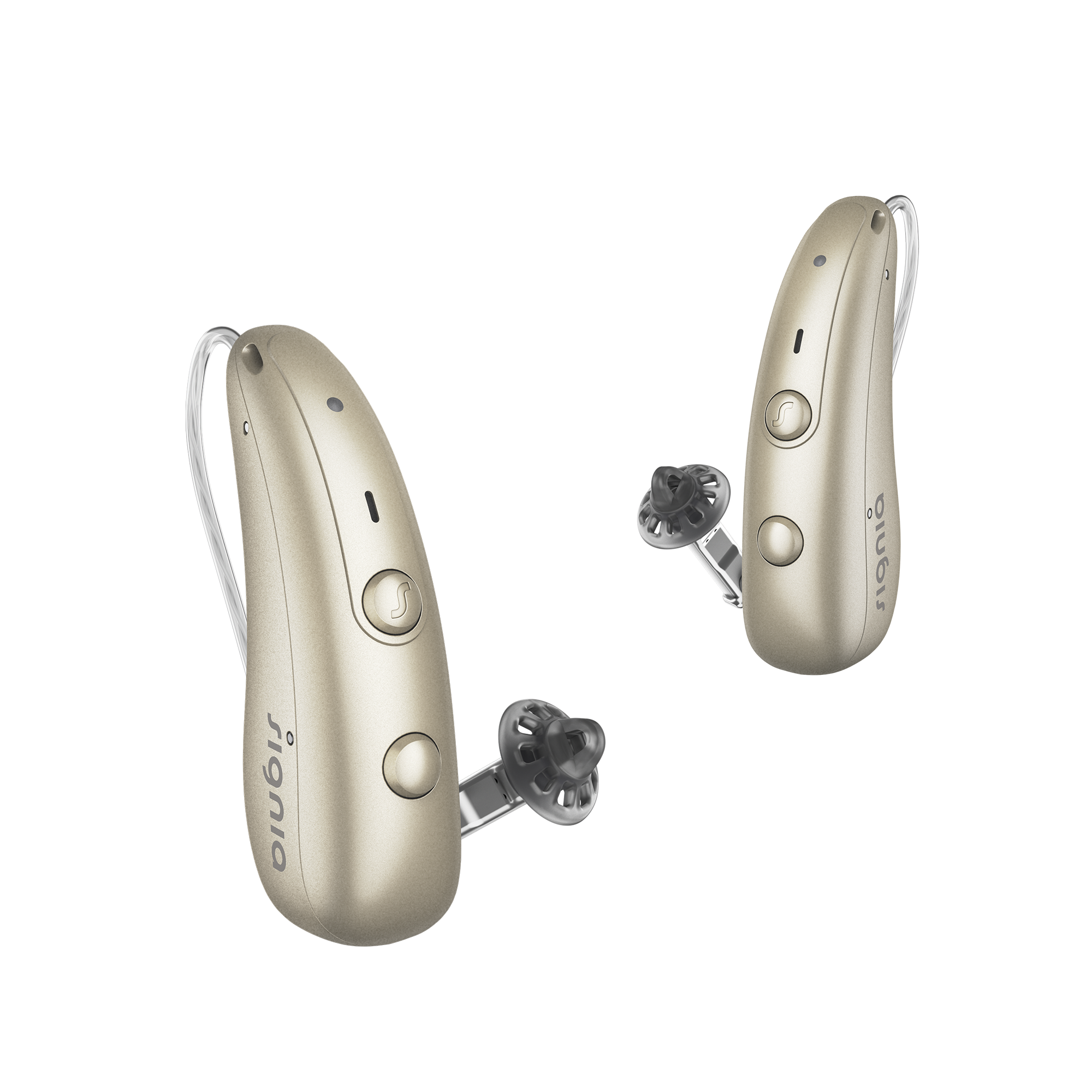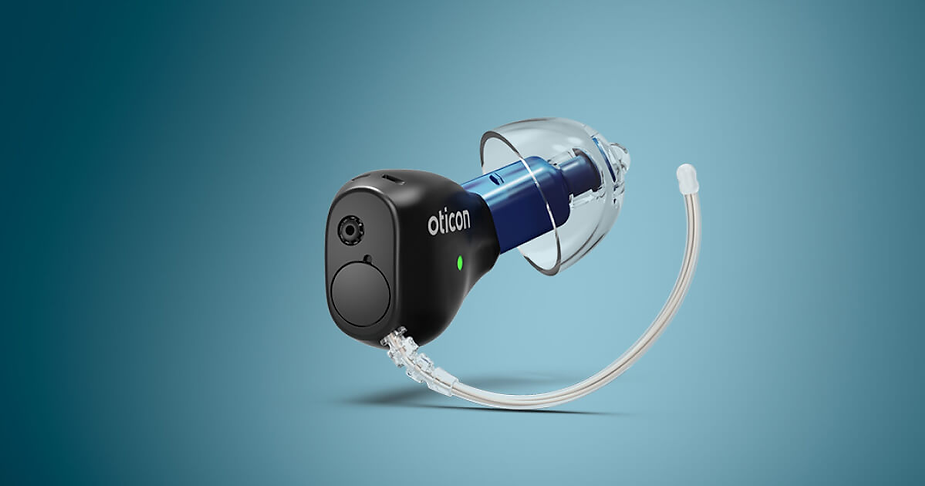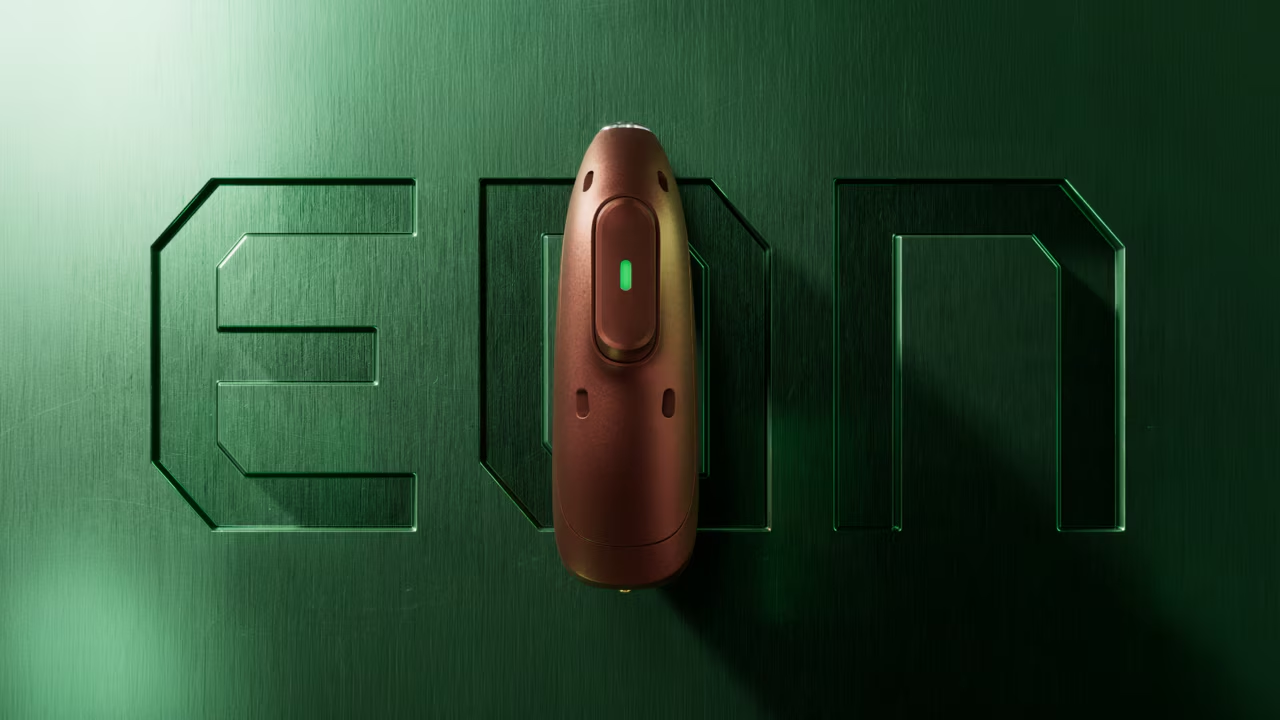


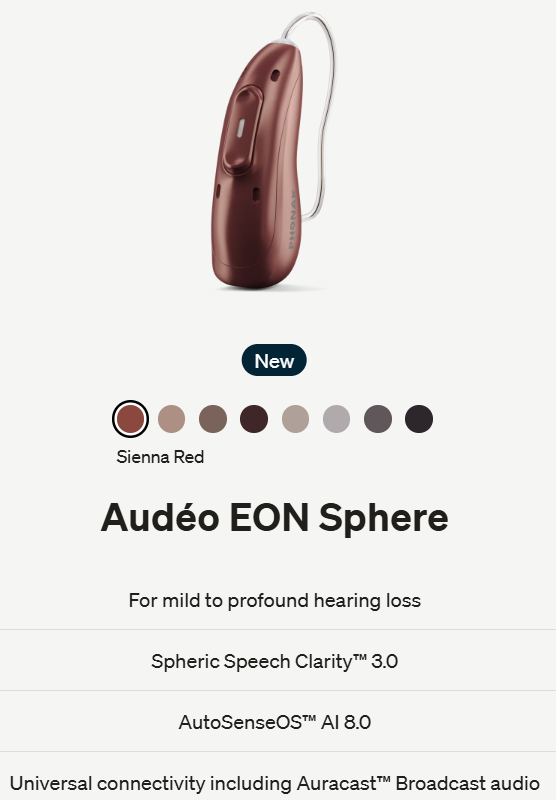
Phonak has introduced Audéo EON Sphere, the latest generation of its AI-powered rechargeable receiver-in-canal hearing aid.
Sphere is an interesting product because its main purpose is not simply to make sounds louder or add another automatic listening programme.
Its focus is much more specific: helping people follow speech when noise is coming from several directions at once.
That is one of the hardest problems hearing aids have to solve — and one of the situations people with hearing loss complain about most.
Restaurants, family gatherings, busy cafés and social events rarely give us one speaker conveniently positioned directly in front of us. Conversations move around the table, people interrupt each other and background noise arrives from every direction.
Audéo EON Sphere has been designed specifically with those situations in mind.
A dedicated AI processor inside the hearing aid
At the heart of Audéo EON Sphere is Phonak's HYPERSONIC AI chip.
This is important because the hearing aid uses dedicated processing hardware for its advanced speech-in-noise system rather than relying entirely on the conventional processing used for everyday hearing.
The chip powers Spheric Speech Clarity 3.0, Phonak's latest generation of its deep-neural-network-based speech processing.
The idea is to analyse a complex sound environment and separate useful speech from competing noise, even when the person speaking is not directly in front of the wearer.
For somebody who struggles primarily in busy social environments, that is potentially far more relevant than simply adding another programme or increasing amplification.
Spheric Speech Clarity 3.0
The feature that really separates Audéo EON Sphere from a conventional hearing aid is Spheric Speech Clarity 3.0.
Traditional directional hearing aid systems often improve speech by concentrating their microphones towards a particular direction — frequently in front of the wearer.
That works well when the conversation behaves itself.
Real life frequently doesn't.
At a restaurant table, one person may speak from the left, another from the right and somebody else from across the table.
Spheric Speech Clarity is designed to analyse speech and noise across the surrounding environment rather than relying purely on a fixed directional focus.
The intention is to make important voices easier to follow while reducing competing background noise.
That doesn't mean noise magically disappears, nor does it guarantee effortless hearing in every restaurant.
But it represents a different approach to one of hearing care's most persistent challenges.
The new Sphere is considerably smaller
There was one fairly obvious compromise with the previous generation of Sphere technology: the hearing aids were larger than many conventional receiver-in-canal devices.
That extra processing required additional hardware and power.
Phonak has addressed that with Audéo EON Sphere.
The new model is quoted as being 25% smaller and 20% lighter than the previous Sphere generation, with a noticeably slimmer overall profile.
That may sound cosmetic, but hearing aids are devices people can wear for twelve or more hours every day.
Size, weight and comfort matter.
A more compact Sphere therefore addresses one of the most obvious practical criticisms of the earlier design.
More efficient AI processing
The new HYPERSONIC chip is also designed to run the Sphere processing more efficiently.
Phonak reports the new system as being 37% more efficient while running Spheric Speech Clarity 3.0 compared with the previous generation running Spheric Speech Clarity 2.0.
That improvement matters because advanced AI processing demands power.
Making the technology more efficient allows Phonak to combine intensive speech processing with a smaller hearing aid while still maintaining practical everyday battery performance.
Up to 38 hours of rechargeable use
Despite the smaller design and considerable amount of processing taking place inside it, Audéo EON Sphere remains fully rechargeable.
Phonak quotes up to 38 hours of battery life from a full charge.
As always, that figure is a maximum rather than something every wearer should expect under every circumstance.
Actual battery life varies depending on factors including hearing loss, listening environment, Bluetooth streaming and which processing features are active.
The important point is that Sphere has moved much closer to the size and everyday practicality people expect from a modern rechargeable hearing aid without abandoning the additional processing that makes the model distinctive.
AutoSenseOS AI 8.0 handles everyday listening
Sphere's specialised AI system isn't working in isolation.
Audéo EON Sphere also uses AutoSenseOS AI 8.0, Phonak's latest automatic sound-management system.
AutoSense analyses the listening environment and automatically changes how the hearing aids respond as the wearer moves between different situations.
That might mean moving from a quiet home into the car, entering a shop, sitting in a café and later walking outside.
Rather than expecting the wearer to select a different programme for each environment, the hearing aids are designed to make those decisions automatically.
The two technologies therefore perform slightly different jobs.
AutoSense manages the changing listening environment generally, while Spheric Speech Clarity provides additional processing when difficult speech-in-noise situations demand it.
Universal Bluetooth remains
Audéo EON Sphere also retains one of Phonak's long-standing strengths: broad Bluetooth compatibility.
It can connect to iPhone, Android and a wide range of other Bluetooth-enabled devices for calls and audio streaming.
That can be particularly useful for people who don't live entirely within one technology ecosystem.
A hearing aid is something somebody may keep for several years. During that time they may change phone, television, tablet or computer.
Broad connectivity therefore remains an important practical feature rather than simply a specification on a brochure.
Auracast is built in
Audéo EON Sphere also supports Auracast broadcast audio.
Auracast allows compatible venues and devices to broadcast audio that can then be received directly through supported hearing aids.
Potential uses include theatres, museums, lecture halls, gyms and other public spaces.
Instead of relying solely on the acoustics of the room, compatible audio could be delivered directly into the hearing aids.
Auracast is still developing, and availability will depend on venues actually installing compatible systems.
So it would be premature to suggest that somebody buying EON Sphere today will immediately find Auracast everywhere they go.
Nevertheless, having support built into the hearing aid makes it considerably more relevant as adoption grows.
Easier protection against earwax
Audéo EON Sphere is also compatible with Phonak's EasyGuard domes.
EasyGuard uses a sealed protective membrane designed to help prevent earwax from entering the hearing aid receiver while still allowing sound to pass through.
Wax protection isn't particularly exciting technology until a blocked receiver leaves somebody unable to hear.
Receiver blockage remains one of the most common maintenance issues with receiver-in-canal hearing aids, so reducing how frequently that happens could make a genuine difference to day-to-day reliability.
Who is Audéo EON Sphere really aimed at?
Sphere is particularly interesting for people whose biggest hearing difficulty isn't necessarily a quiet one-to-one conversation, but following speech in busy and unpredictable surroundings.
Someone who frequently says:
"I can hear people talking, but I can't make out what they're saying when everyone is together"
is describing exactly the sort of listening problem this technology is attempting to address.
That doesn't mean EON Sphere is automatically the right hearing aid for everybody.
Hearing loss varies enormously, and sophisticated technology still needs to be selected, programmed and verified properly for the person wearing it.
Someone who rarely encounters challenging noise may also gain less from Sphere's specialised processing than somebody with an active social or working life.
Should existing hearing aid wearers upgrade?
Not simply because Sphere is newer.
A well-fitted pair of existing hearing aids that somebody is happy with doesn't suddenly become ineffective when a manufacturer launches a new model.
The more useful question is whether the newer technology addresses a problem that the current hearing aids are failing to solve.
For somebody whose present hearing aids work well in most situations but consistently struggle in restaurants, groups and busy social environments, Audéo EON Sphere becomes much more interesting.
Likewise, somebody considering hearing aids for the first time who already knows that background noise is one of their major difficulties may reasonably want to explore what this type of processing can offer.
Final thoughts
Audéo EON Sphere is one of the more technically interesting developments in Phonak's current hearing aid range.
The headline feature remains Spheric Speech Clarity 3.0 and the dedicated HYPERSONIC AI processing behind it.
But perhaps the more significant achievement is that Phonak has managed to package that technology into a hearing aid that is smaller, lighter and more practical than the previous Sphere generation.
Add universal Bluetooth connectivity, Auracast, rechargeable operation and easier maintenance, and Sphere begins to look less like an experimental piece of AI technology and more like a hearing aid designed for everyday use.
As always, however, advanced processing is only part of the equation.
The best hearing aid remains the one that is appropriate for the individual's hearing loss, lifestyle and listening needs — and is fitted properly to deliver what that technology is capable of.