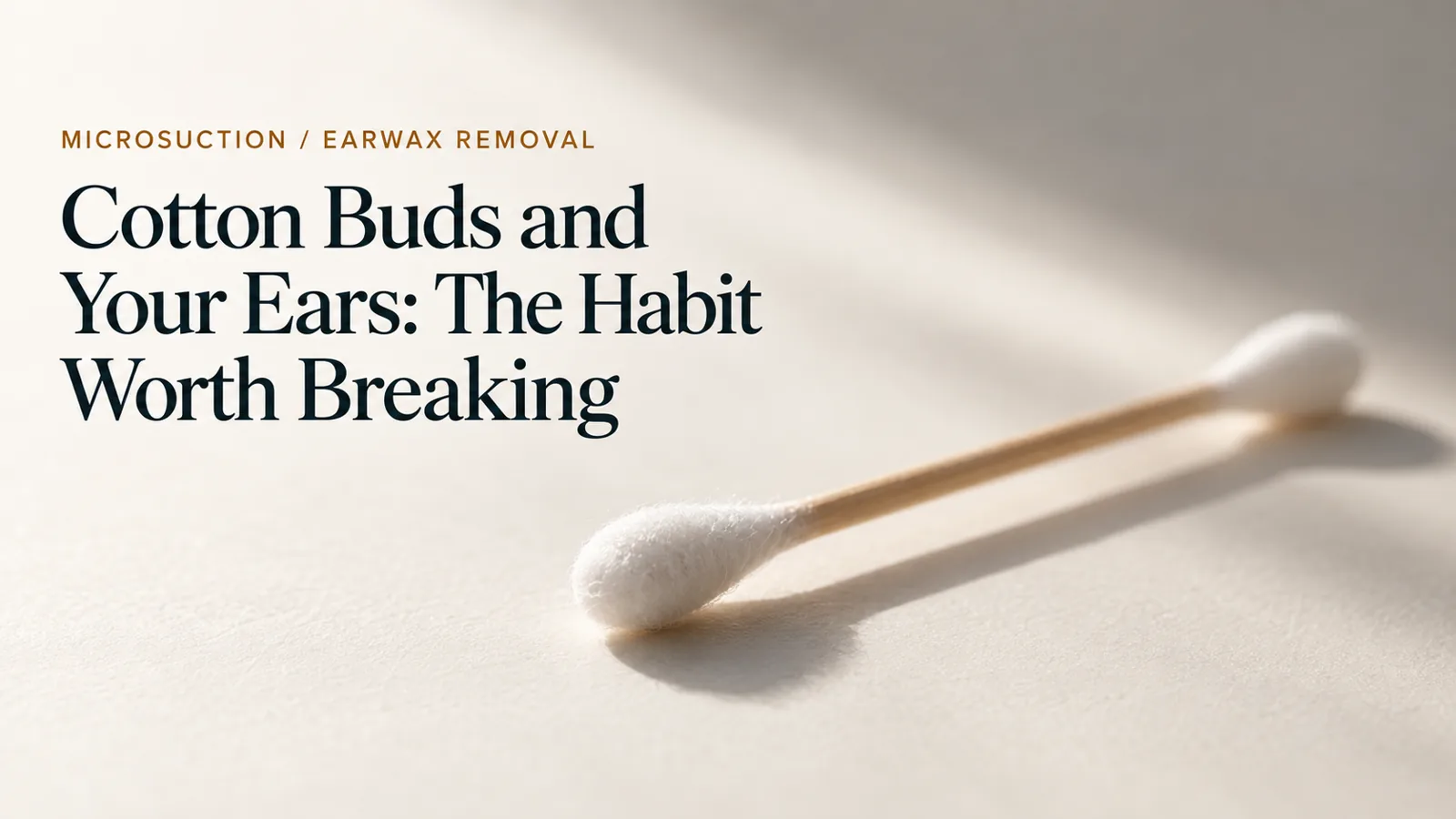


If you keep a packet of cotton buds by the bathroom sink, you are in good company. Most of us were raised to think a quick clean-out after a shower is simple hygiene. The trouble is that, when it comes to earwax, cotton buds usually make the very problem they are meant to solve.
We see the results of this most weeks here in Wickersley. So let us explain plainly what is going on inside your ear, and what actually works instead.
What is earwax actually for?
Earwax (the proper name is cerumen) is not dirt, and it is not a sign that you have neglected yourself. Your body makes it on purpose. It traps dust and debris, keeps the delicate skin of the ear canal from drying out, and has mild antibacterial properties that help fend off infection.
Here is the part most people never hear: your ears are self-cleaning. Every time you talk and chew, the small movements of your jaw gently shift old wax outwards towards the opening of the ear, carrying trapped dust with it. For the great majority of adults, the ears simply do not need cleaning inside at all.
So why do cotton buds make earwax worse?
The ear canal is narrow and slightly curved, and a cotton bud is wider than it looks in that space. When you push one in, it may lift a little wax from near the opening, but it drives the rest deeper, packing it down against the eardrum where the natural self-cleaning cannot reach. That compacted plug is exactly what causes a blockage.
The more you poke to clear the fullness, the more tightly the wax becomes wedged, and the more stubborn it gets. There are other risks too. The lining of the canal is thin and easily scratched, which can let an infection take hold, and if your hand slips, a cotton bud can reach far enough to damage the eardrum itself. If you want a simple rule for looking after your ears, our ear health guidance comes down to this: nothing smaller than your elbow goes in your ear.
How do I know if wax has built up?
A wax blockage tends to creep up gradually rather than arrive overnight. The signs to watch for include:
- Hearing that sounds muffled or dull, often in one ear more than the other
- A feeling of fullness or pressure, as though your ear needs to "pop"
- Mild earache or itchiness
- Ringing or buzzing in the ear (tinnitus)
- Occasionally, a sense of being slightly off balance
It is worth knowing that not every case of dull hearing is down to wax. Sometimes the cause sits deeper, and that is why it helps to check properly rather than guess. Our free online online hearing check is a sensible first step if you are not sure. If ringing in the ears is your main worry and it does not settle once any wax is cleared, tinnitus is best looked at with your GP or the NHS in the first instance; our page on tinnitus explains what we can and cannot help with, and where to turn for dedicated support.
What should I do instead of reaching for a cotton bud?
The honest answer for most people is reassuringly little:
- Leave healthy ears alone. Wipe the outer ear with a warm, damp flannel and let the canal look after itself.
- Soften stubborn wax with drops. A few days of medical-grade olive oil drops, or a pharmacist-recommended sodium bicarbonate solution, will often help a plug loosen and work its own way out.
- Skip ear candles. There is no good evidence they draw out wax, and they carry a real risk of burns and dripped wax in the canal.
- Come to us if the drops do not shift it. We remove wax by microsuction, a gentle technique that uses a fine suction device under a bright microscope. No water is flushed into your ear, and most people find it quick and comfortable. You can read more on our wax removal page.
When should I see someone, and when can I wait?
You might not need us yet. If your hearing is only mildly muffled and nothing is painful, a short course of softening drops and a little patience often does the job on its own. It is worth booking an appointment if a blockage will not clear after a week or two of drops, if the fullness keeps returning, or if you have ongoing discomfort.
Do seek help promptly for ear pain, any discharge, or a sudden drop in hearing, as these deserve a proper look. As an HCPC-registered, independent clinic, we will always tell you honestly whether there is anything to treat.
If your ears feel blocked and drops have not worked, book a microsuction wax-removal appointment and we will take a proper look, or call us on 01709 437250 for a chat first.