

Modern hearing aids give you a choice you did not have a decade ago. You can pop a tiny battery in every week or so, or you can simply drop the aids onto a charger overnight, much like your phone. Both approaches work well, and neither is a gimmick. The right one for you comes down to your hands, your habits and your daily routine, not the marketing on the box.
Here is an honest look at how rechargeable and traditional battery hearing aids compare, so you can work out what fits your life in and around Wickersley and the wider Rotherham area.
What is the actual difference between the two?
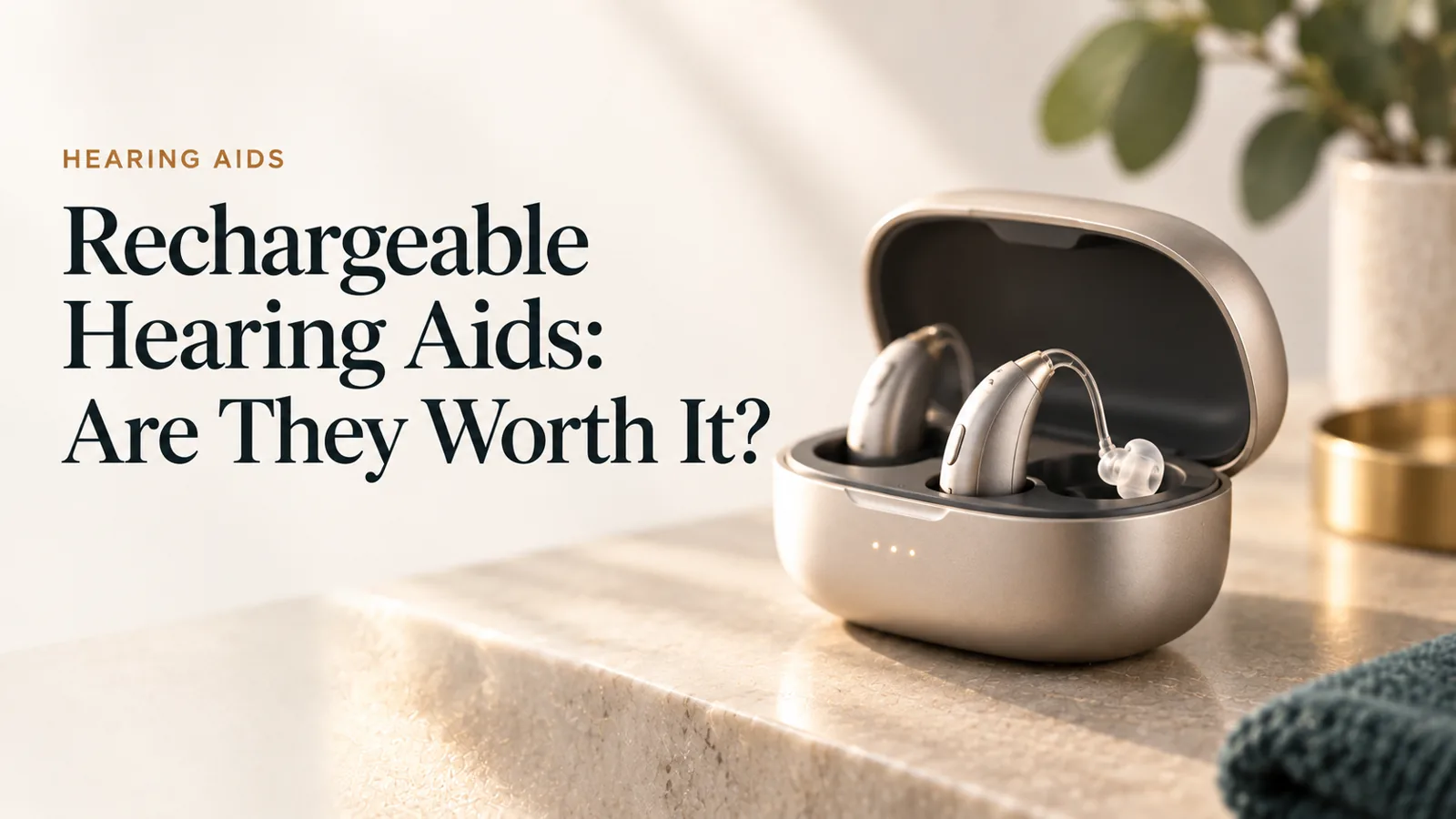
A rechargeable hearing aid has a sealed lithium-ion battery built in, the same technology as your mobile. You place the aids in a charging case each night, and by morning they are ready for a full day. There is no little door to open and nothing small to handle.
A traditional battery hearing aid uses a replaceable zinc-air battery, a small round cell you slot in yourself. When it runs flat, you swap it for a fresh one. Depending on the size of the aid and how much you use it, a battery typically lasts anywhere from a few days to a couple of weeks.
Both are proven and reliable. The rest of the decision is about which one suits how you actually live.
Who tends to prefer rechargeable hearing aids?
Rechargeable models have become the most popular choice for good reason. They suit you well if:
- You find fiddly tasks awkward. Arthritis, reduced dexterity or shaky hands can make handling a tiny battery frustrating, and a charger removes that job entirely.
- Your eyesight is not what it was, and lining up a small battery is a strain.
- You like a simple routine. Charging becomes as automatic as putting your glasses on the bedside table.
- You would rather not keep spare batteries in your pocket, your car and the kitchen drawer.
- You care about waste. One built-in battery over several years replaces a lot of little discs going in the bin.
For many people, the appeal is simply peace of mind. You are far less likely to be caught out by a flat battery at the worst moment if the aids are charged and waiting for you every morning.
When do traditional batteries still make sense?
Replaceable batteries are far from old-fashioned, and for some people they remain the better fit. They may suit you if:
- You travel a lot or are often away from a plug socket. A spare pack of batteries weighs almost nothing, and you are never dependent on finding a charger or remembering to plug in.
- You want a smaller, more discreet aid. The tiniest in-the-ear styles sometimes only come as battery models, because a rechargeable cell needs a little more room.
- You have long or unpredictable days. If a battery does run low, you swap it in seconds and carry on, rather than waiting for a charge.
- You simply prefer the familiarity. If you have used battery aids happily for years, there is no need to change for the sake of it.
This is the honest bit. A newer technology is not automatically the right one for you. It depends on your hands, your travel and your preferences.
What is battery life like in real, everyday use?
A good rechargeable aid should comfortably last a full waking day on a single overnight charge, and most charging cases give you a few extra top-up charges when you are out and about. Streaming a lot of phone calls, music or television sound directly to your aids uses more power, so a heavy streaming day will draw the battery down faster. That is worth mentioning to us if you stream constantly, because it can steer the choice.
With replaceable batteries, the practical question is whether you are happy keeping a small supply on hand and swapping them when needed. Some people barely think about it. Others find it a small chore they would rather be rid of.
Does the brand you choose change the decision?
We are fully independent, so we fit all seven leading manufacturers rather than pushing one. Every major brand now offers strong rechargeable options alongside battery models, and we have no quota or bias steering you one way. Our job is to match the technology, the style and the power source to your hearing and your lifestyle, then let you handle both types before you decide. You can see the full range of options and styles on our hearing aids page.
The best way to settle it is to try. At your appointment we can show you both, talk through your typical week, and be straight with you about what will genuinely serve you best. If you are new to us, our guide to your first visit explains exactly what to expect.
Not sure where to begin? Book a hearing-aid consultation and we will help you choose in person, with no pressure, or call us on 01709 437250 for a friendly chat first.