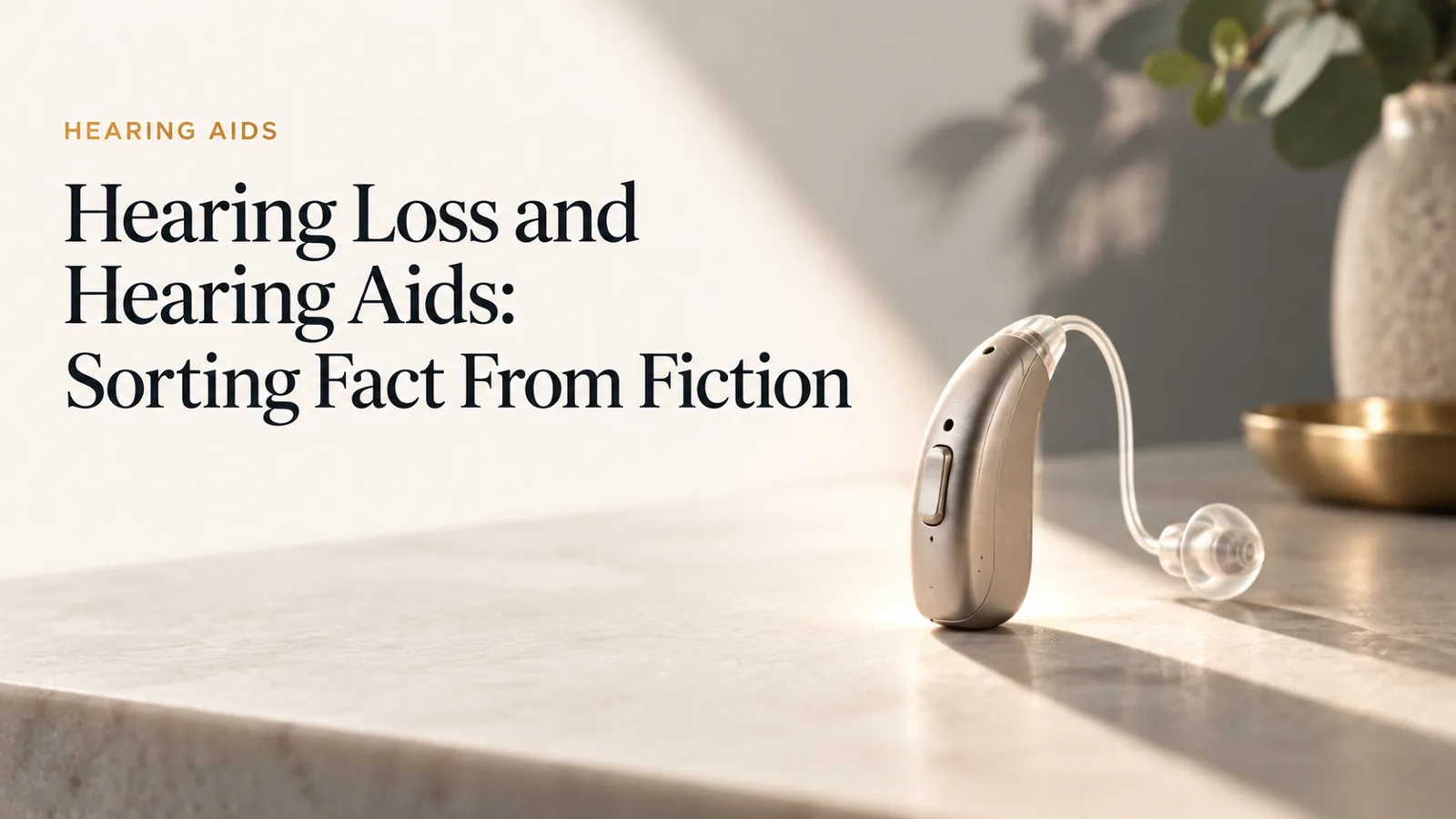

There is plenty of received wisdom about hearing loss and hearing aids, and a fair bit of it is simply out of date or wrong. The trouble is that these myths often stop people getting help for years longer than they need to.
As an independent, family-run clinic in Wickersley, we hear the same misunderstandings almost every week. Here are the ones most worth setting straight.
Isn't hearing loss just part of getting older?
Age is one cause, but it is far from the only one. Years of noisy work, loud hobbies, certain medications, family history and even a simple build-up of earwax can all play a part. We see adults of all ages, and hearing loss is rarely about age alone.
It is also worth taking seriously. Research increasingly links untreated hearing loss with things like social withdrawal, low mood and a faster decline in memory and concentration. Nobody is saying a hearing aid is a magic shield, but staying connected to conversation clearly matters. The encouraging part is that hearing loss is common and, for most people, very treatable. If you would like to understand the different types and causes, our guide to hearing loss is a good place to start.
My hearing isn't that bad, so why bother?
Hearing loss usually creeps in so gradually that you adapt without realising. Often it is the people around you who notice first: the television is louder than it used to be, you ask for things to be repeated, or you struggle to follow a chat in a busy cafe on Bawtry Road.
The honest answer is that you might not need us yet, and we will always tell you if that is the case. A quick, free online hearing check is a sensible first step. Sometimes the culprit is nothing more than wax, which is quickly sorted, and sometimes a proper test simply gives you a baseline to keep an eye on. A full hearing test is painless, takes under an hour and tells you exactly what is going on.
Aren't hearing aids big, ugly and always whistling?
This is one of the most stubborn myths, and it is well out of date. Modern hearing aids are small, discreet and often barely visible. Many are rechargeable, so there are no fiddly batteries, and most connect straight to your phone or television. The old whistling, known as feedback, has largely been designed out.
Because we are independent, we are not tied to any single manufacturer. We fit all seven leading brands, including Widex, Phonak, Signia, Starkey, Oticon, ReSound and Unitron, and we recommend what genuinely suits your hearing, your ears and your lifestyle. There is no quota and no pressure. You can read more on our hearing aids page.
Won't a hearing aid give me perfect hearing back?
This is where we like to be straight with people. Hearing aids are very good, but they help you manage hearing loss rather than cure it. They do not rebuild the fine detail your ears may have lost, and your brain needs a little time, usually a few weeks, to relearn sounds it has been missing.
Expectations matter. Fitted well and adjusted properly, hearing aids can make a real difference to conversation, television and confidence. And if only one ear seems affected, it is still often better to balance both, because that is how the brain locates sound and separates speech from background noise. Give it time and stick with it, and most people are pleasantly surprised.
Is it true that nothing can be done about ringing in the ears?
Not quite. Tinnitus, that ringing, buzzing or hissing many people notice, can be unsettling, but it is not something you simply have to put up with in silence. We can assess it and treat the causes we are able to, such as earwax or an underlying hearing loss, which for some people eases the noise.
We are honest about our limits, though. We do not run a dedicated tinnitus therapy programme, so if tinnitus is your main concern we would point you first to your GP and the NHS, and to the British Tinnitus Association for trustworthy support. Our tinnitus page explains what we can and cannot help with.
If any of these myths have been holding you back, a friendly chat is the easiest way to get real answers. Book a hearing-aid consultation or call us on 01709 437250, and we will tell you honestly where you stand.