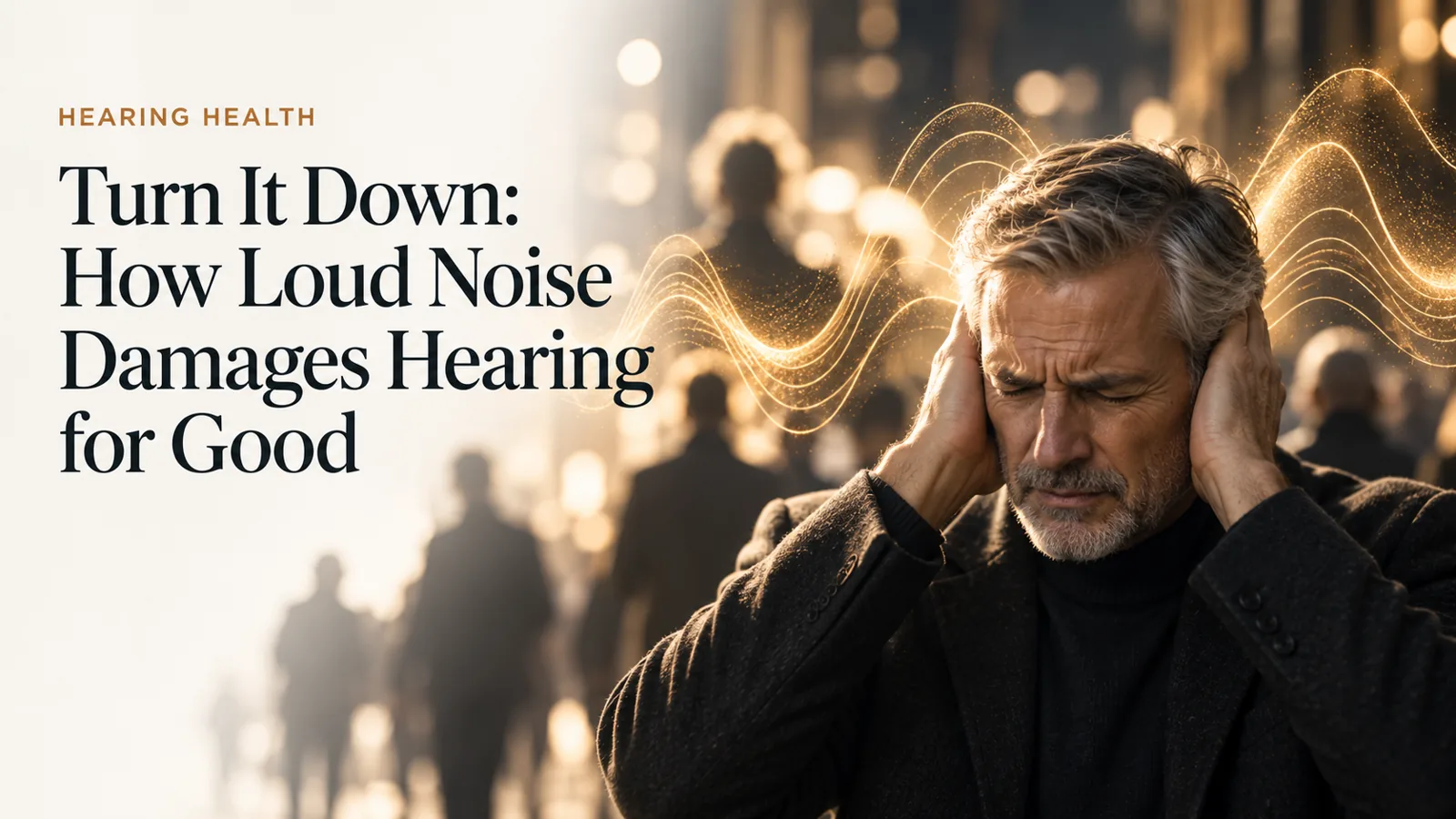


Most hearing loss creeps up so slowly that people don't notice it for years. Some of it, though, comes down to something we can actually control: noise. Loud sound, whether it arrives in one almighty bang or builds up quietly over decades, wears out the delicate machinery inside your ears. And once that machinery is gone, it doesn't come back.
The good news is that noise-related hearing loss is very largely preventable. Here is what actually happens inside your ears, which everyday sounds do more harm than you'd think, and how to protect the hearing you still have.
Why is noise-related hearing loss permanent?
Deep inside your inner ear sits a tiny, snail-shaped structure called the cochlea. It's lined with thousands of microscopic hair cells that pick up sound vibrations and turn them into signals your brain understands. These hair cells are remarkable, but they have one serious flaw. You are born with all the ones you will ever have, and they do not regrow.
Loud noise physically batters these cells. A single very loud event, such as an explosion or a gunshot at close range, can flatten them in an instant. More often the damage is gradual. Years of moderately loud sound slowly kill off hair cells a few at a time, usually starting with the ones that pick up higher-pitched sounds. That is why noise-related loss often shows up first as a struggle to follow speech in a busy room, even when everything still seems loud enough.
Because the cells do not recover, this kind of hearing loss is permanent. We can help you manage it and hear well again with the right support, but we cannot undo it. That is exactly why protection matters so much.
How loud is too loud?
Two things decide whether a sound is harming you: how loud it is, and how long you are exposed to it. As a rough rule, the louder something is, the less time it takes to do damage. A quiet conversation is harmless all day long. A rock concert or a chainsaw can start causing harm within minutes.
A simple test: if you have to raise your voice to be heard by someone at arm's length, the noise is loud enough to be a concern over time.
Everyday sources that quietly add up around Rotherham homes and workplaces include:
- Power tools, angle grinders, and lawnmowers in the garden or workshop
- Live music, nightclubs, and loud pubs
- Motorbikes and noisy engines, especially over long rides
- Factory, workshop, and warehouse floors, past and present. A lot of South Yorkshire ears still carry the legacy of years on the tools.
- Headphones and earbuds turned up too high, particularly on the bus or train where you push the volume up to drown out background noise
None of these is dangerous now and then at sensible levels. The problem is repeated, unprotected exposure, week after week and year after year.
How do you know if noise has already affected you?
Your ears often give you a warning. After a loud gig or a day with power tools, you might notice a ringing, buzzing, or hissing in your ears, sounds that seem muffled or underwater, or a feeling of fullness. Usually this settles within a day or two. That temporary dip is your ears telling you they have taken a hit. If it keeps happening, some of that damage stops being temporary and becomes permanent. Persistent ringing that does not fade, or hearing that stays muffled, is worth getting checked.
One important warning. If your hearing drops suddenly, over a few hours or a day or two, and especially in one ear, treat it as a medical emergency. Contact your GP the same day, call NHS 111, or go to A&E. Sudden hearing loss recovers best when it is treated within days, so do not wait to see whether it improves on its own.
What can you do to protect your hearing?
Protecting your ears is simple, and it is never too late to start. The damage you prevent from today onward is damage you keep out for good. A few habits make a real difference.
- Turn it down. With headphones, the 60/60 guide is easy to remember: no more than 60% of full volume, for no more than 60 minutes at a stretch, then a break. Over-ear headphones that block outside noise let you listen comfortably at lower volumes.
- Step back and take breaks. At a concert, stand away from the speakers, and give your ears quiet spells to recover after loud ones.
- Wear proper protection for loud jobs and hobbies. Foam plugs or earmuffs from any DIY shop are far better than nothing for mowing, drilling, or shooting.
- Consider custom protection. If you are a musician, a regular gig-goer, a shooter, or a motorcyclist, custom-moulded plugs are shaped to your ears and let clear sound through while cutting the harmful volume.
We can talk you through the options and take moulds for custom hearing protection. It is one of the most worthwhile things you can do for ears you'd like to rely on for years to come.
What if the damage is already done?
If you think noise has already taken its toll, the first step is simply to find out where your hearing stands. A online hearing check is quick, painless, and tells you exactly what is going on. If there is loss, catching it early means you can act before it starts to affect conversations, confidence, and relationships.
Where noise has caused lasting loss, modern hearing aids can restore a great deal of what has been muffled. As an independent clinic we fit all seven leading brands, so we recommend what suits your ears and your life, not whatever one manufacturer is pushing.
Worried that noise has caught up with you, or simply want a baseline while your hearing is still sharp? Book a free hearing test with our friendly team in Wickersley, or call us on 01709 437250.