

The colder months have a habit of playing havoc with our ears. Between winter colds, damp South Yorkshire mornings and the central heating running full blast, it is very common to notice your ears feeling blocked, muffled or a little tender at this time of year. Most of the time there is nothing to worry about, but it helps to know what is normal, what you can sort out at home, and when a proper look is worthwhile.
Here is our plain guide to looking after your ears through a Rotherham winter.
Why do colds make your ears feel blocked?
When you have a cold, the lining of your nose and throat swells and produces more mucus. The narrow tube that connects the back of your nose to your middle ear, called the Eustachian tube, can get blocked as a result. That is why a heavy cold often leaves you feeling stuffy and muffled, with ears that pop when you swallow or the sense that you are listening through cotton wool.
The reassuring part is that this is nearly always temporary. As the cold clears, the swelling settles and your hearing returns to normal, usually within a week or two. A few things can ease it in the meantime:
- Stay well hydrated and try breathing in the steam from a bowl of hot water.
- Swallowing, yawning or gently trying to "pop" your ears can encourage the tube to open.
- Over-the-counter decongestants may help, though check with your pharmacist first if you take other medication.
In other words, you might not need us yet. If the blocked feeling lingers well after the cold itself has gone, that is when it is worth investigating.
Is it a cold, or is it earwax?
Winter is prime time for earwax troubles. Wax tends to harden in colder weather, and many of us reach for cotton buds when an ear feels blocked, which usually pushes the wax deeper and packs it against the eardrum. The result is a dull, blocked sensation that a cold cannot quite explain, sometimes with mild earache or your own voice sounding loud inside your head.
The single best thing you can do is leave cotton buds well alone. The ear is largely self-cleaning, and a little wax is healthy and protective. If wax has genuinely built up, we remove it by microsuction, a gentle, water-free method that uses a fine suction instrument under a bright light and a microscope. It is quick, comfortable and far kinder than the old syringing approach. There is more on keeping your ears in good order on our ear health page.
How should I look after my hearing aids in damp weather?
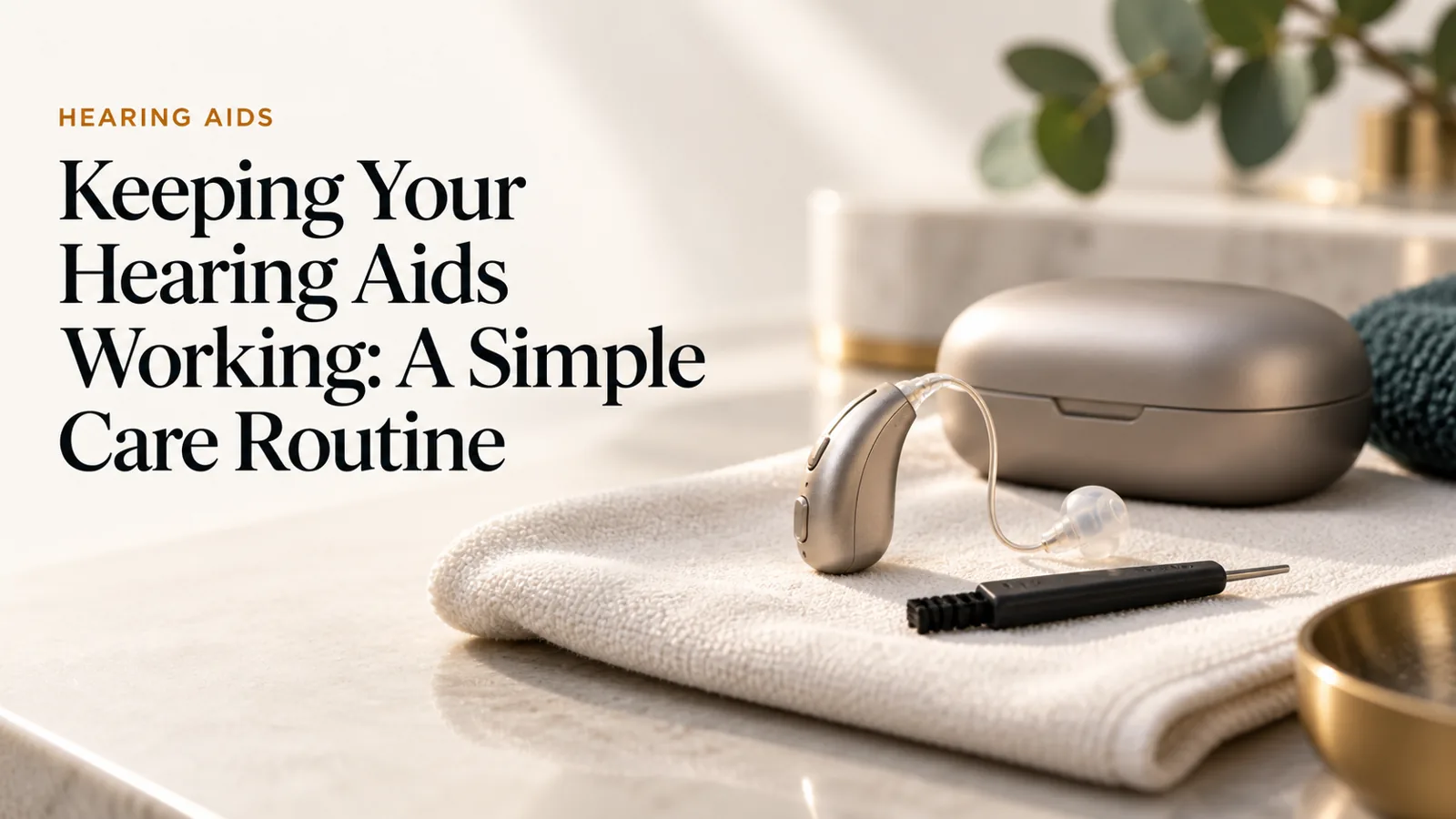
If you wear hearing aids, winter asks for a little extra care. Moisture is the enemy of electronics, and the mix of cold air outdoors and warm, humid air indoors causes condensation, exactly as it does on your windows. Damp can dull the sound, cause crackling, or stop an aid working altogether.
A few simple habits make a real difference:
- Wipe your hearing aids with a dry, soft cloth each evening. Never use water or cleaning wipes.
- Open the battery door overnight, or use a drying pot or electronic dryer to draw out moisture.
- Keep them out of coat pockets, where they gather lint and damp, and well away from radiators.
- Dry your ears thoroughly after a shower before putting the aids back in.
If the sound is still faint or intermittent after a good clean and dry, bring them in. As an independent clinic we look after every make we fit, so it makes no difference which of the leading brands you wear. You can read more about the hearing aids we work with, and if an aid still will not cooperate we will take a proper look at it.
Should I worry about earache or an infection?
Ear infections are more common in winter and often follow a cold. Warning signs include persistent pain, discharge from the ear, a high temperature, or hearing that drops off quickly. An infection is a medical matter rather than something we treat, so please see your GP or pharmacist, who can advise on the right treatment. As a general rule, severe or lasting earache, or any hearing loss that comes on suddenly in one ear, should be checked without delay.
When is it worth coming to see us?
Most winter niggles pass on their own. But there are times when a professional look is the sensible next step:
- Your ears still feel blocked or muffled a couple of weeks after a cold has cleared.
- You suspect wax and would rather have it removed safely than poke about at home.
- Family are the ones telling you the television is too loud, or you keep missing bits of conversation.
- Your hearing aids are underperforming despite a thorough clean.
If you are not sure whether it is a passing winter blockage or something more, our free online online hearing check is a quick, no-pressure way to get a first sense of things from your armchair. If you would rather see us in person, a full hearing assessment will get to the bottom of it.
As a family-run, independent practice, we will always tell you honestly what your ears need, even if that is simply to wait for the cold to pass. If a blocked or muffled ear is bothering you this winter, book a microsuction wax-removal appointment or call us on 01709 437250.