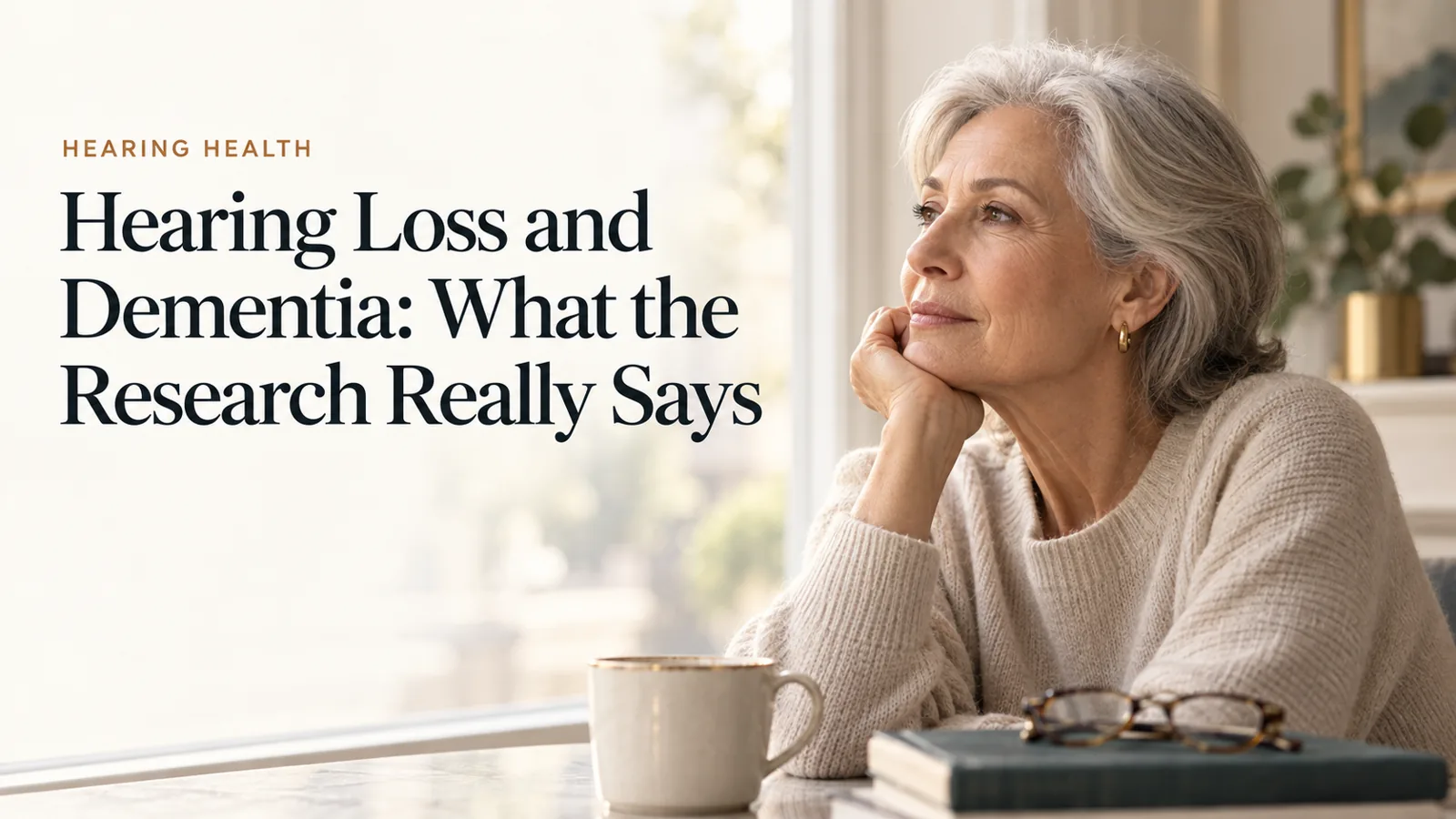

If you have read a newspaper headline linking hearing loss to dementia, it is easy to feel worried. It is one of those subjects that gets simplified into something frightening, when the honest picture is more measured and, frankly, more hopeful.
As an independent, family-run clinic here in Wickersley, we would rather give you the calm version. Here is what the research actually suggests, what it does not say, and the sensible things you can do about it.
Is there really a link between hearing loss and dementia?
Yes, there is a genuine association, and it is taken seriously by researchers. Major reviews of dementia risk identify hearing loss as a potentially modifiable risk factor, particularly in mid-life. That is an important finding, but it describes a population-level association rather than a prediction about any one person.
But an association is not the same as a direct cause. Having some hearing loss does not mean you will develop dementia, and plenty of people with reduced hearing never do. What the research points to is that hearing well may be one of several things that help support the brain over time, alongside staying active, keeping social ties, and looking after your general health.
Why might poor hearing affect the brain?
Researchers have a few sensible theories, and the truth is probably a combination of them:
- Extra effort. When sound is unclear, the brain has to work harder to fill in the gaps. Over years, that constant strain may leave fewer resources for memory and thinking.
- Pulling back from people. When conversations become tiring, many people quietly withdraw. They stop going to the club, avoid the phone, sit quietly at family gatherings. Less social contact and mental stimulation is thought to be part of the picture.
- Changes in the brain itself. Some studies suggest that reduced input from the ears may, over time, affect the parts of the brain that process sound.
None of this is meant to alarm you. It simply explains why hearing well matters for more than just catching the words.
Does treating hearing loss lower the risk?
This is where we have to be honest. The research here is promising but still developing. Some observational studies suggest that treating hearing loss, often with hearing aids, may be associated with slower cognitive decline, and one trial found a possible benefit in older adults already at higher risk. The overall evidence is still developing, so this is not proof that hearing aids prevent dementia.
What we will not do is promise you that hearing aids prevent dementia. Nobody can honestly say that. What we can say is that hearing your grandchildren, following a conversation in a busy café, and staying connected to the people around you are good things in their own right, and that keeping your hearing working well is a reasonable, low-risk step to take.
What can you actually do about it?
The practical steps are refreshingly ordinary:
- Get your hearing checked. If it has been a while, or if others are nudging you about the television volume, it is worth finding out where you stand. You can start with our free online online hearing check from your armchair.
- Rule out the simple causes. Sometimes reduced hearing is just wax. That is quickly and safely dealt with, and it may be all that is needed.
- Stay social and active. Keep up the conversations, the hobbies, the walks with friends. It is good for your ears, your mind and the rest of you.
- Look after the basics. Blood pressure, exercise, not smoking; the same things that are good for your heart tend to be good for your ears and brain too.
When should you come and see us?
You might not need us yet, and we will always tell you honestly if that is the case. But if conversations are getting harder, if you are turning the volume up, or if you simply want peace of mind, a proper hearing assessment is a sensible move. It is nothing to be nervous about; you can read exactly what to expect at your first visit, which includes a friendly, no-pressure test with no obligation to buy anything.
As independent audiologists, we are not tied to any one manufacturer, so any advice you get is about your hearing, not a sales target.
If you would like a clear, honest picture of your hearing, book a free hearing test or call us on 01709 437250. We are happy to talk it through, no pressure at all.