

If you have ever noticed a ringing, buzzing or hissing in your ears when the room goes quiet, you are far from alone. Tinnitus is one of the most common things people ask us about, and for the majority it turns out to be more of a nuisance than a sign of anything serious. Even so, it can be unsettling, especially when no one has taken the time to explain what it actually is.
This is a plain guide for adults in Wickersley, Rotherham and the surrounding villages: what tinnitus is, what tends to bring it on, and what genuinely helps. We will also be honest about the things that do not, because there is a lot of noise out there (no pun intended).
What exactly is tinnitus?
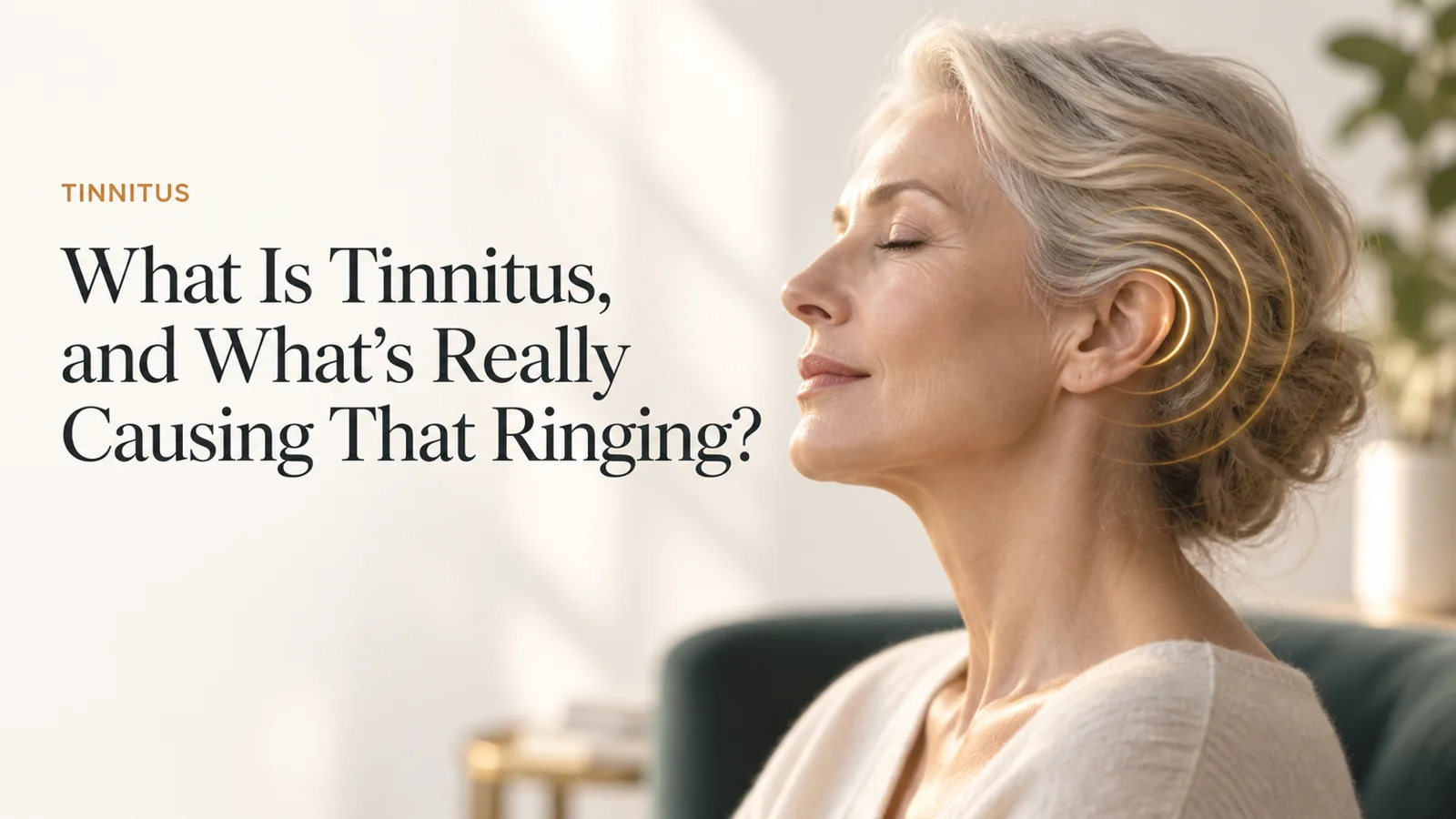
Tinnitus is the name for hearing a sound that has no source outside your body. It might be a ringing, buzzing, whistling, humming, or even a pulsing that seems to keep time with your heartbeat. You may hear it in one ear, in both, or somewhere in the middle of your head. For some people it is constant; for others it comes and goes.
Importantly, it is not a disease in its own right. It is a symptom, and there is rarely one single explanation: it can occur with hearing loss, earwax, noise exposure, some medicines and other conditions. The reassuring part is that the brain is very good at learning to filter it into the background over time, in much the same way you stop noticing the hum of the fridge or a clock ticking.
What causes ringing in the ears?
There is rarely one single cause, but the usual suspects include:
- Hearing loss, whether age-related or from years of noise. Tinnitus and hearing loss very often go hand in hand.
- Earwax. A simple blocked ear can be enough to set it off.
- Loud noise, such as concerts, machinery or power tools, particularly after a heavy exposure.
- Stress, tiredness and caffeine, which tend to make you notice it more rather than cause it outright.
- Certain medicines, and occasionally middle-ear infections or other health conditions.
Because hearing loss is so often part of the picture, and because a build-up of wax is one of the easiest things to put right with microsuction wax removal, checking both is usually a sensible first step.
Should I be worried about it?
Most tinnitus is harmless. That said, a few signs are worth getting looked at promptly, so please contact your GP if your tinnitus:
- is only in one ear
- pulses in time with your heartbeat
- came on suddenly rather than gradually
- arrives alongside dizziness, sudden hearing loss or ear pain
These symptoms do not automatically mean something serious, but they should not be self-diagnosed. Follow NHS urgent advice for sudden hearing loss, facial weakness or vertigo; otherwise contact your GP promptly, especially for pulsatile or persistent one-sided tinnitus.
What genuinely helps?
Here is the honest bit. For most people there is no single cure that switches tinnitus off, so be wary of anything sold as a guaranteed fix. What does help is a mix of practical, well-established things:
- Treating any cause we can find, such as removing wax or addressing hearing loss with well-fitted hearing aids, which often eases the tinnitus at the same time.
- Adding gentle sound so the tinnitus has less silence to stand out against. Many people find a fan, soft music or the everyday sound that hearing aids restore makes a real difference.
- Understanding it. Knowing that tinnitus is common and usually harmless takes a surprising amount of the worry away, and less worry tends to mean you notice it less.
- Looking after sleep and stress, since tiredness and tension both turn the volume up.
If tinnitus is present without any hearing loss and is really affecting you, structured NHS tinnitus support and the British Tinnitus Association are excellent starting points, and your GP can refer you.
How can Wickersley Audiology help?
We are an independent, family-run clinic, HCPC-registered and members of the BSHAA. When you come to us with tinnitus, we assess it properly: we check your ears for wax, carry out a full hearing test, and talk through what we find and what your options are. Where hearing loss is part of the story, we fit hearing aids from all seven leading brands, with no bias and no sales targets.
We want to be clear about what we do not do. We do not run a dedicated tinnitus therapy programme and we do not offer devices such as Lenire, so if that is what you need we will happily point you towards your GP and NHS services. You can read more on our tinnitus page, and a good, no-cost first step is our free online hearing check.
If tinnitus is wearing you down and you would like a calm, no-pressure assessment from people who will actually listen, book a hearing assessment or give us a ring on 01709 437250.