

Start looking into hearing aids and it can feel like everyone is speaking a different language. Receiver-in-canal, directional microphones, open fittings, rechargeable cells. It is enough to put anyone off before they have begun. The good news is that choosing a hearing aid does not have to be complicated, and it should never feel like being sold a car.
At our clinic in Wickersley, we fit hearing aids for adults across Rotherham and the surrounding villages, and we do it without a sales quota or a favourite brand to push. Here is how we would talk you through the decision if you were sat across the desk from us.
Do you actually need a hearing aid yet?
This is the honest place to begin, and it is a step some clinics skip. Not everyone who books in leaves with hearing aids, and that is exactly how it should be.
Sometimes what feels like hearing loss is simply a build-up of earwax pressing against the eardrum. A proper look and, where it is needed, gentle microsuction wax removal can make a real difference on its own. Other times the loss is mild enough that you may choose to keep an eye on it for now. If you are unsure where you stand, our free online hearing check takes a few minutes and gives you a sensible first idea before you commit to anything.
What styles of hearing aid are there?
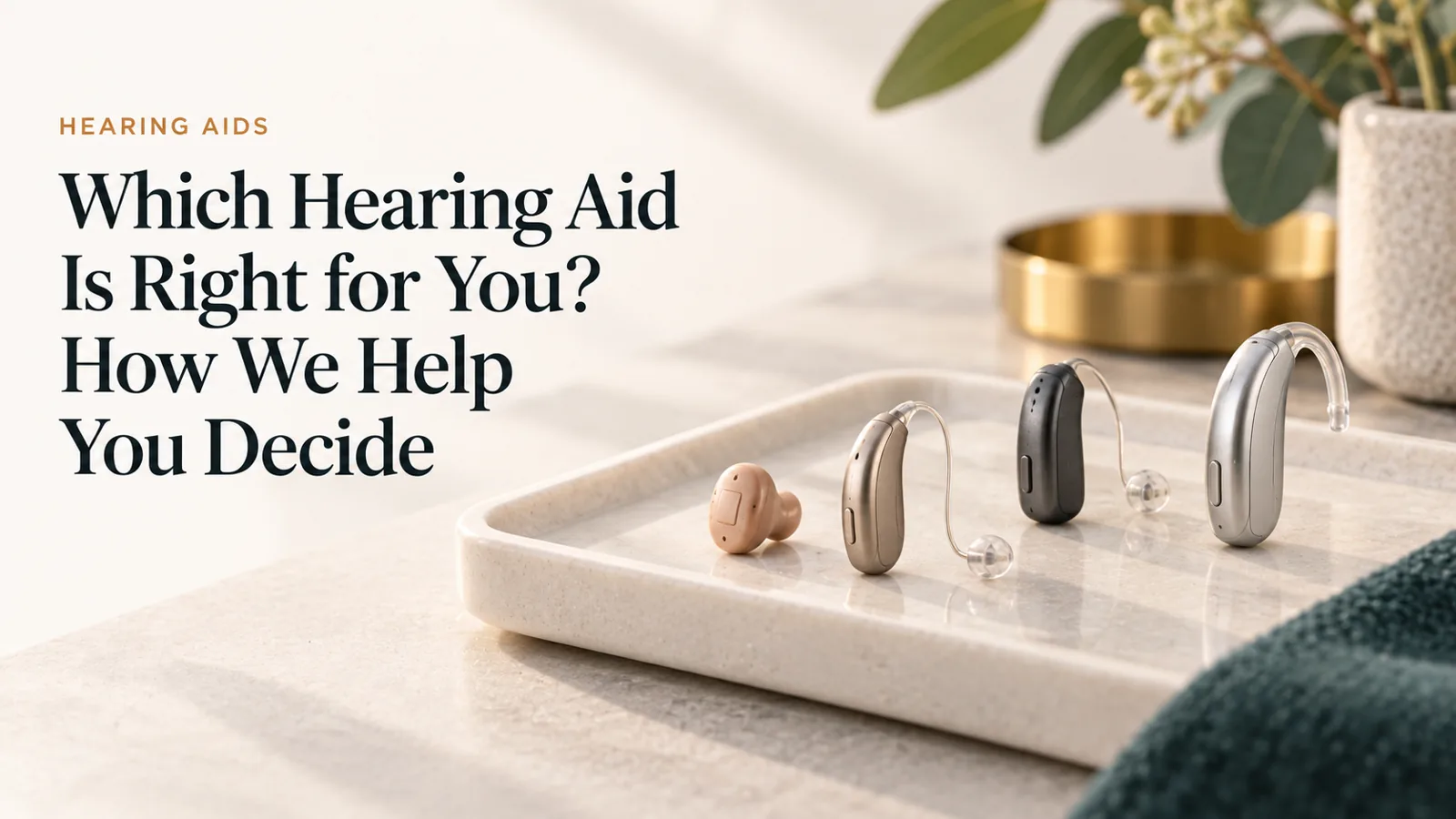
Modern hearing aids come in a handful of shapes. The right one depends on your hearing, the shape of your ears and your day-to-day life, rather than on fashion.
- Behind-the-ear (BTE): sits behind the ear with a slim tube into the canal. Sturdy, easy to handle and suitable for most levels of hearing loss.
- Receiver-in-canal (RIC): the most popular style today. Discreet and comfortable, with a tiny speaker that sits in the ear canal for a natural sound.
- In-the-ear (ITE): custom-made to fill part of the ear. Neat, and simple to pop in and out.
- Completely-in-canal (CIC): the smallest option, tucked well inside the canal so it is barely visible. Better suited to milder losses and steadier hands.
Smaller is not automatically better. A very small aid can be fiddly if your fingers are less nimble, and there is less room inside for a big battery or a powerful speaker. We would always rather find the style you will genuinely wear and enjoy, not the one that looks cleverest in a brochure.
Which features are worth thinking about?
Once you know the style, it is a case of matching a few features to how you actually spend your time. You do not need every extra going.
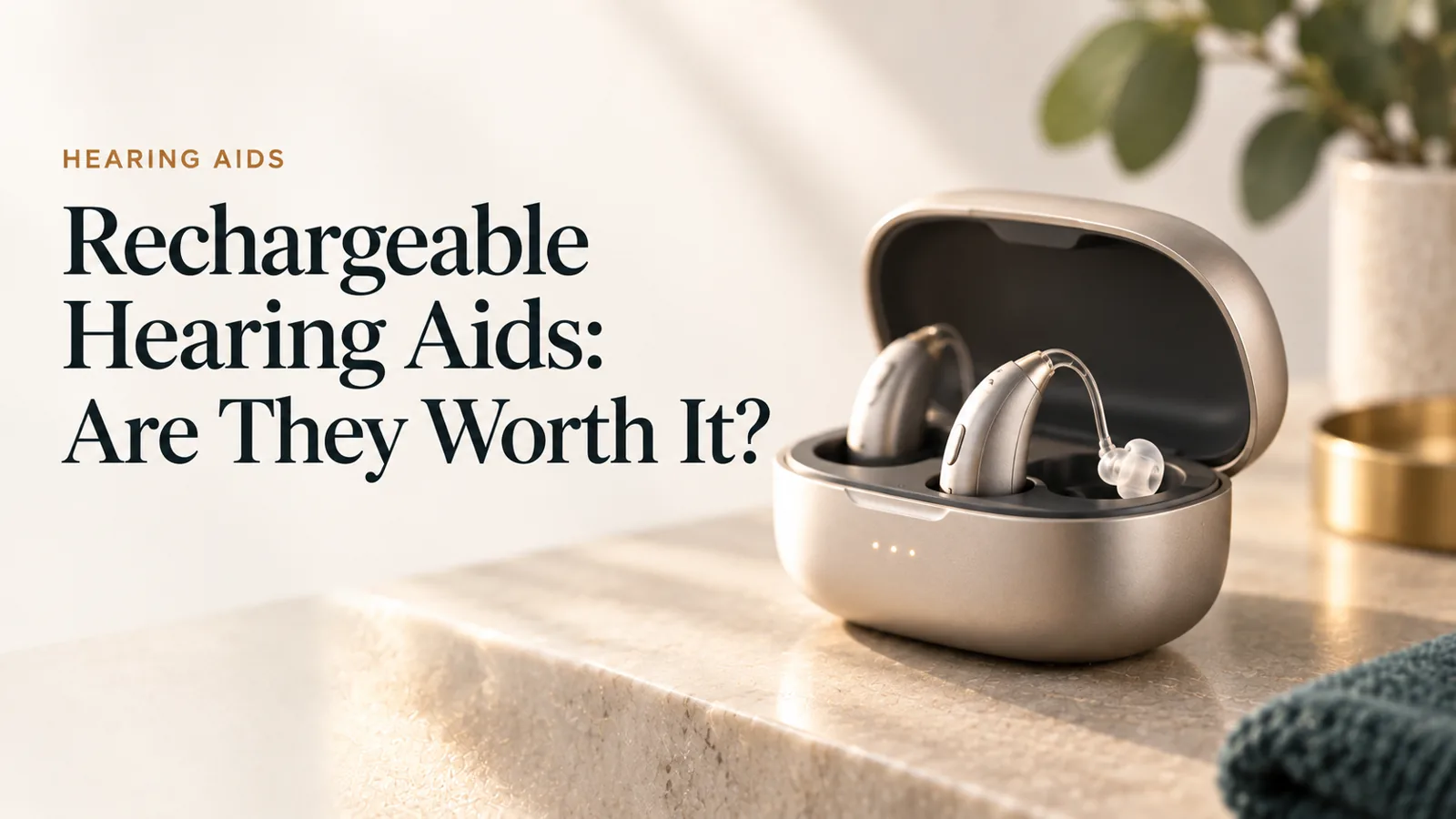
- Rechargeable or batteries: rechargeable aids sit on a charger overnight and save fiddling with tiny batteries. Traditional batteries suit some people better, and both work perfectly well.
- Phone and television streaming: many aids connect to a mobile phone or telly, so calls and programmes come straight into your ears. Lovely if you use it, not worth paying for if you never will.
- Handling background noise: if you struggle most in busy cafés or family gatherings, this is where a more capable aid earns its keep by lifting speech above the hubbub.
- Comfort and fit: the aid you forget you are wearing is the one you will keep in. Comfort matters just as much as clever electronics.
The best hearing aid is simply the one matched to your life, whether that is catching every word at a grandchild's birthday or hearing the doorbell from the garden.
Does the brand matter?
People often ask us which make is best. The honest answer is that there is no single winner. We are fully independent and fit all seven of the leading brands, including Widex, Phonak, Signia, Starkey, Oticon, ReSound and Unitron. Each has genuine strengths, and the right choice comes down to your hearing and your priorities rather than a logo. Because we are not tied to any one manufacturer, we can recommend whatever suits you and change our mind if a better option comes along. You can read more about the hearing aids we fit and how we compare them.
What happens at the fitting, and afterwards?
Choosing the aid is only half the story. A hearing aid needs setting up carefully to your own hearing, and then fine-tuning once you have lived with it for a week or two in the real world. Good aftercare, regular reviews and someone local to call when something is not quite right matter far more than the last few technical bells and whistles.
If you would like to see what all of this looks like in practice, our page on what to expect at your first visit walks you through the whole appointment, with no pressure and no obligation to buy anything.
When you are ready, you can book a hearing-aid consultation online, or give us a ring on 01709 437250 and we will happily talk things through first.