

If you grew up in Rotherham, the phrase "getting your ears syringed" probably sounds familiar. For decades it was the standard way to shift stubborn earwax, and it was usually done at the GP surgery. These days you are far more likely to be offered microsuction instead, and many practices no longer syringe at all.
So what actually changed, and does it matter which method clears your ears? Here is an honest comparison from an independent clinic that only uses microsuction.
What is ear syringing, and why has it fallen out of favour?
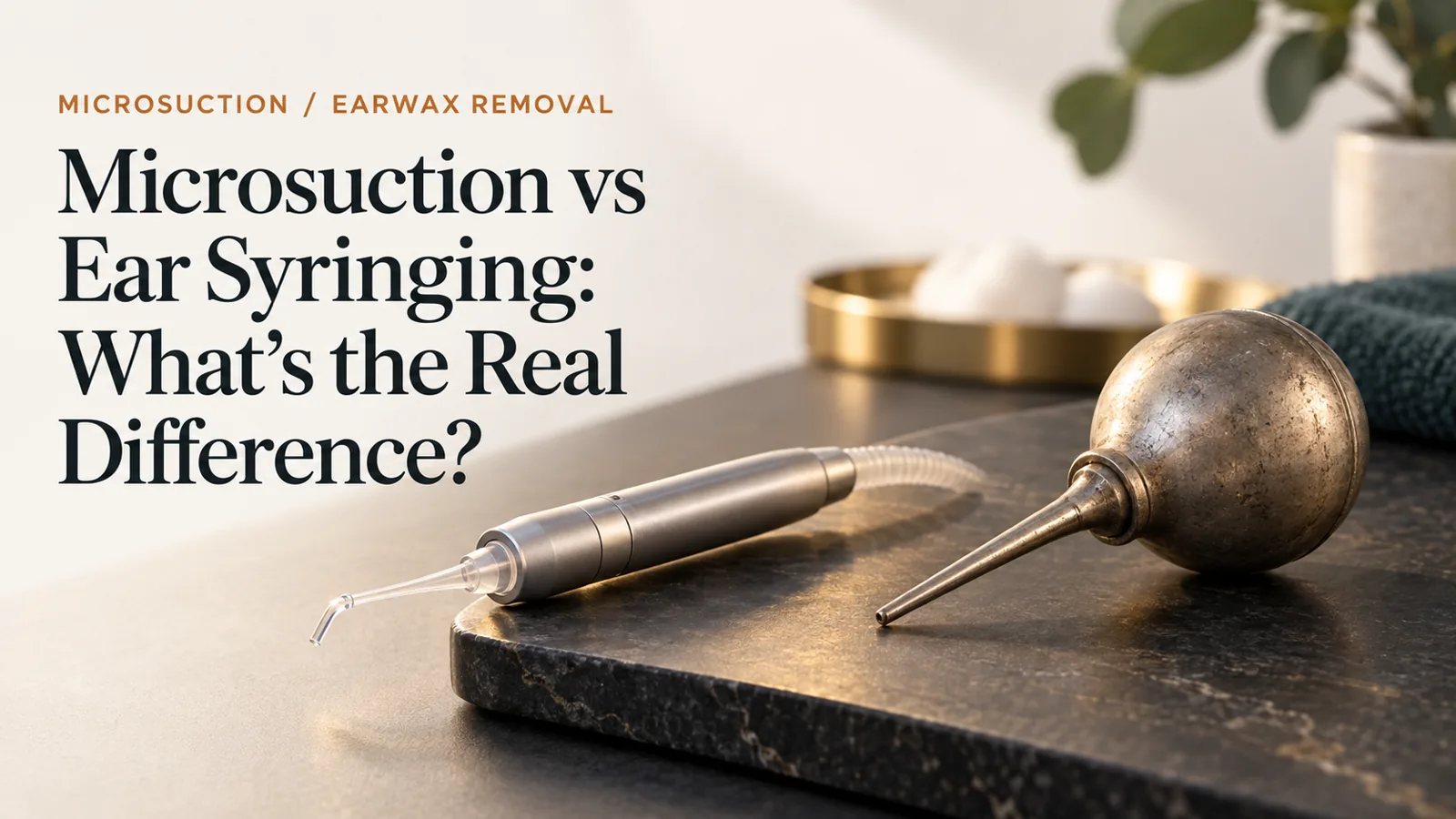
Traditional ear syringing, more properly called irrigation, works by flushing warm water into the ear canal under pressure to wash the wax out. Older equipment used a metal syringe; later versions used an electronic pump with more controlled pressure. It could be effective, but it carried some well-known drawbacks.
- The water pressure could feel uncomfortable and, occasionally, cause damage to the delicate eardrum.
- The wax is flushed out "blind", so the person doing it cannot see the canal clearly while they work.
- It was not suitable for people with a history of a perforated eardrum, ear surgery, recurrent infections or a grommet.
- Ears often had to be softened with drops for several days beforehand, and one visit did not always clear them.
Many NHS areas have stepped back from routine irrigation for these reasons, which is partly why so many people now look elsewhere to have their ears cleared.
How is microsuction different?
Microsuction uses no water at all. The clinician wears magnified glasses or uses a microscope to look right into your ear canal, then gently draws the wax out with a fine, low-pressure suction device. Think of it as a tiny, precise vacuum rather than a flush.
- We can see exactly what we are doing throughout, so it is far more controlled.
- No water goes into the ear, which lowers the risk of infection and makes it suitable for many more people.
- It is usually quick, and in most cases you do not need days of drops first, though a little olive oil in the days before can help very hard wax.
- Because it is a dry procedure, it is generally the preferred option if you have had ear surgery, a perforation or a history of infections.
You can read more about how we approach it on our wax removal page.
Is microsuction safe, and does it hurt?
For most people microsuction is comfortable and straightforward. You will hear a whooshing, slightly noisy sound as the suction passes near the eardrum, which can feel a bit odd but is not painful. Some people find it briefly loud, and that noise is completely normal; it settles the moment the procedure finishes.
It is a low-risk procedure in trained hands. As HCPC-registered clinicians and members of the British Society of Hearing Aid Audiologists (BSHAA), we always examine your ears first and will tell you honestly if microsuction is not the right option for you that day.
Which method suits who?
Because we only offer microsuction, we cannot syringe your ears, and in truth we would not want to. That said, here is a fair summary.
- Microsuction suits almost everyone, including people who are not candidates for irrigation.
- Irrigation may still be offered elsewhere for very soft, loose wax, but it is less controlled and unsuitable for anyone with the ear conditions listed above.
If a previous water flush ever left you sore or dizzy, microsuction is often a gentler experience.
Do I actually need my ears cleared?
Earwax is normal and healthy. It protects and cleans the ear canal, and for most people it works its own way out without any help. You do not need to remove it just because it is there, and cotton buds tend to push it deeper rather than clearing it. You might genuinely not need us yet.
Professional wax removal is worth considering if you notice:
- A blocked or muffled feeling in one or both ears
- Hearing that has dropped gradually
- Itchiness, mild earache or a sense of fullness
- A hearing aid that keeps whistling because wax is building up
One important exception: if your hearing drops suddenly, especially in one ear, or you have sudden pain, discharge or ringing, do not wait for a wax appointment. Contact your GP the same day or call NHS 111, and go to A&E if you cannot get seen. Sudden hearing loss is treated as a medical emergency and recovers best when it is looked at within days. Wax can wait; that cannot.
What happens at your appointment?
We keep things simple. We ask a few questions about your ear history, then examine both ears before doing anything at all. If there is wax to remove, we talk you through it and get on with it, usually in the same visit. If your ears are already clear, or the problem turns out to be something other than wax, we will say so and point you in the right direction rather than treating you unnecessarily.
If you are not sure what to expect, our guide to your first visit walks through it step by step.
Ready to get things moving? You can book a microsuction wax-removal appointment online, or call our Wickersley clinic on 01709 437250 and we will find a time that suits you.